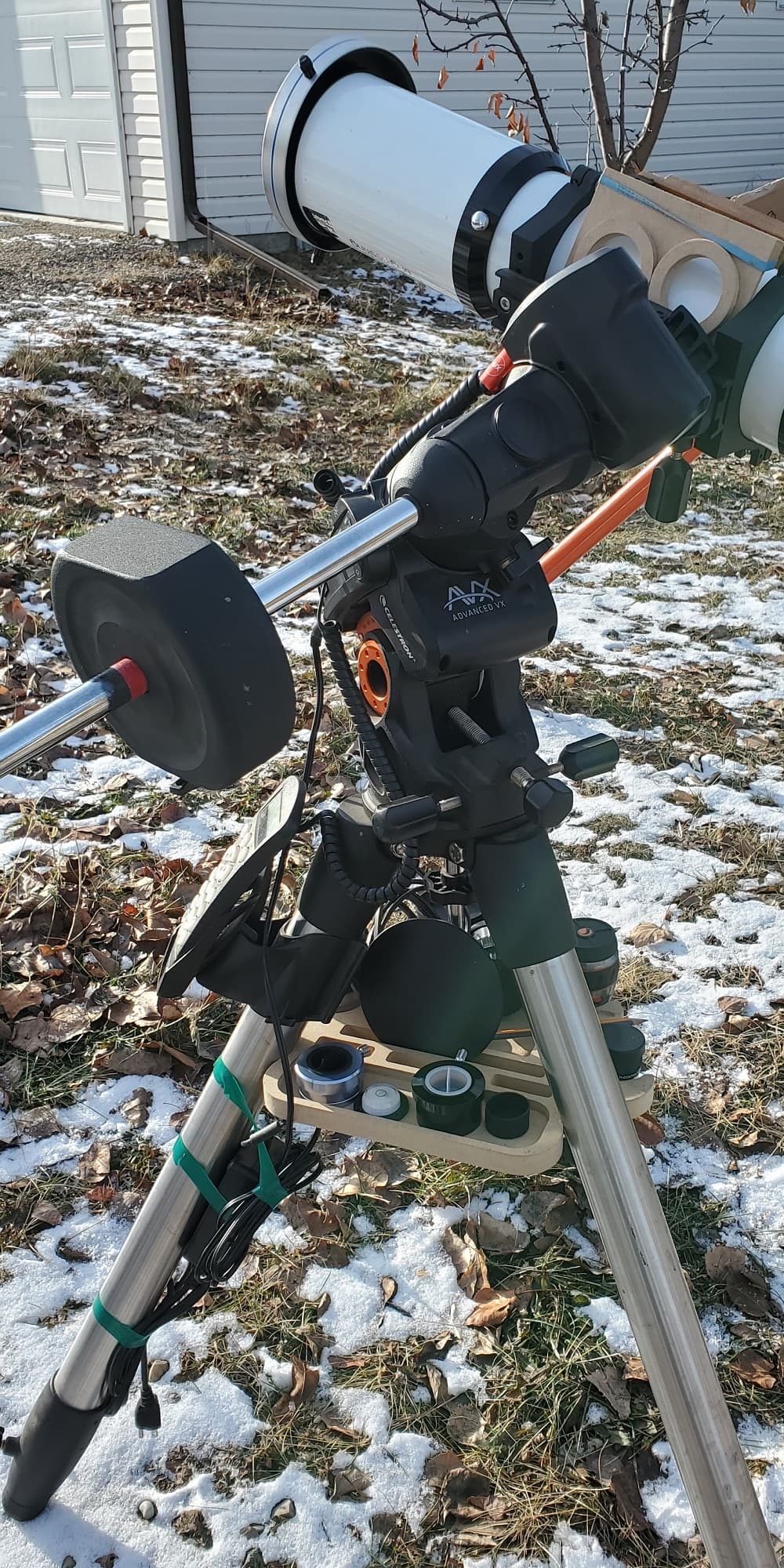
I also made a spreader plate for the tripod of my telescope.
This allows me to carry out a variety of eyepieces while I’m using it, and also have places for lenscaps, pencils, and other odds and ends.
1 Like
Very functional and convenient!
Cool you got the router working, at least in 2d!
I’ve been giving the router some servicing and tune-ups this week, too.
The “cable chain” on the X-axis was built too short, preventing the head from moving all the way across the gantry. It was odd, because the lead-screw and the linear rails are long enough for full travel, but the cable was made too short. Then I realized why the guy did what he did, because the cable chain would hit the X-axis drive motor if it went too far.
While figuring that out, I also found a solution, made a new bracket to secure the cable chain to another part of the carriage, and it works now.
I can now claim this router table has 50 inches of travel, instead of 47".
Too bad you aren’t closer to me Sparweb. I rebuild vintage metal lathes, shapers, milling machines, drill presses, American built bench vises, band saws, etc. I could have set you up with a very nice group of machines.
Are you taunting me? There’s probably a border in between us.
My band saw currently needs work. Not vintage but definitely old. Very inconvenient to find the motor dying when cutting jobs need to be done.
My bench vise is… cheap… and definitely not american-made. Ya gotta start somewhere.
This thread could use an update. I’ve done many jobs with the router. A recent one was to make a new hub plate for the wind turbine’s blades. Here’s a partially complete hub, during a tool change before installing the drill center to locate and start the bolt holes.
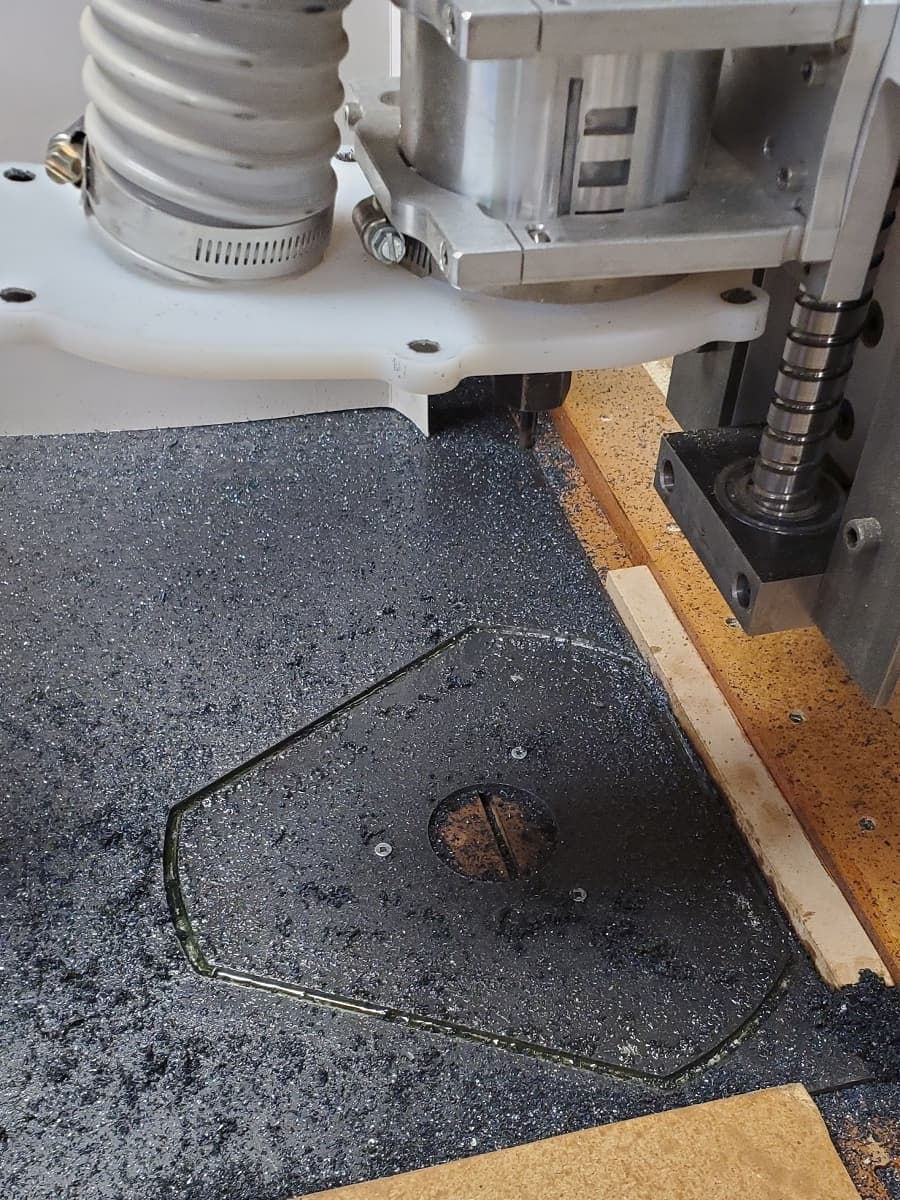
OK this was an ambitious job for my little router, since I’m cutting 3/16" steel with a 1/4" cutter using a Makita router designed for wood. Before starting I had determined that if I got into trouble, I could finish the job with the band saw and drill press. (Little did I know the band saw was about to quit!) Anyway the router did the job due to carefully selected feeds and speeds. Using a suitable coolant also proved to be crucial - before figuring it out I melted a cutter!
Routers always run fast. They’re made to cut wood not metal, usually with tiny cutting tools less than 1/4" diameter. Trying to cut steel with one introduces a problem: the cutter speed is 10x times faster than you want it. Without a sophisticated speed controller, it’s going to turn at 10,000-15,000 RPM when you only want 1000.
When I want to splurge, I will pay for a proper CNC machine tool spindle, and the speed controller to go with it.
I am pleasantly surprised that the router is stiff enough to make these parts. The bearings on the Makita didn’t give out either, which was another risk.